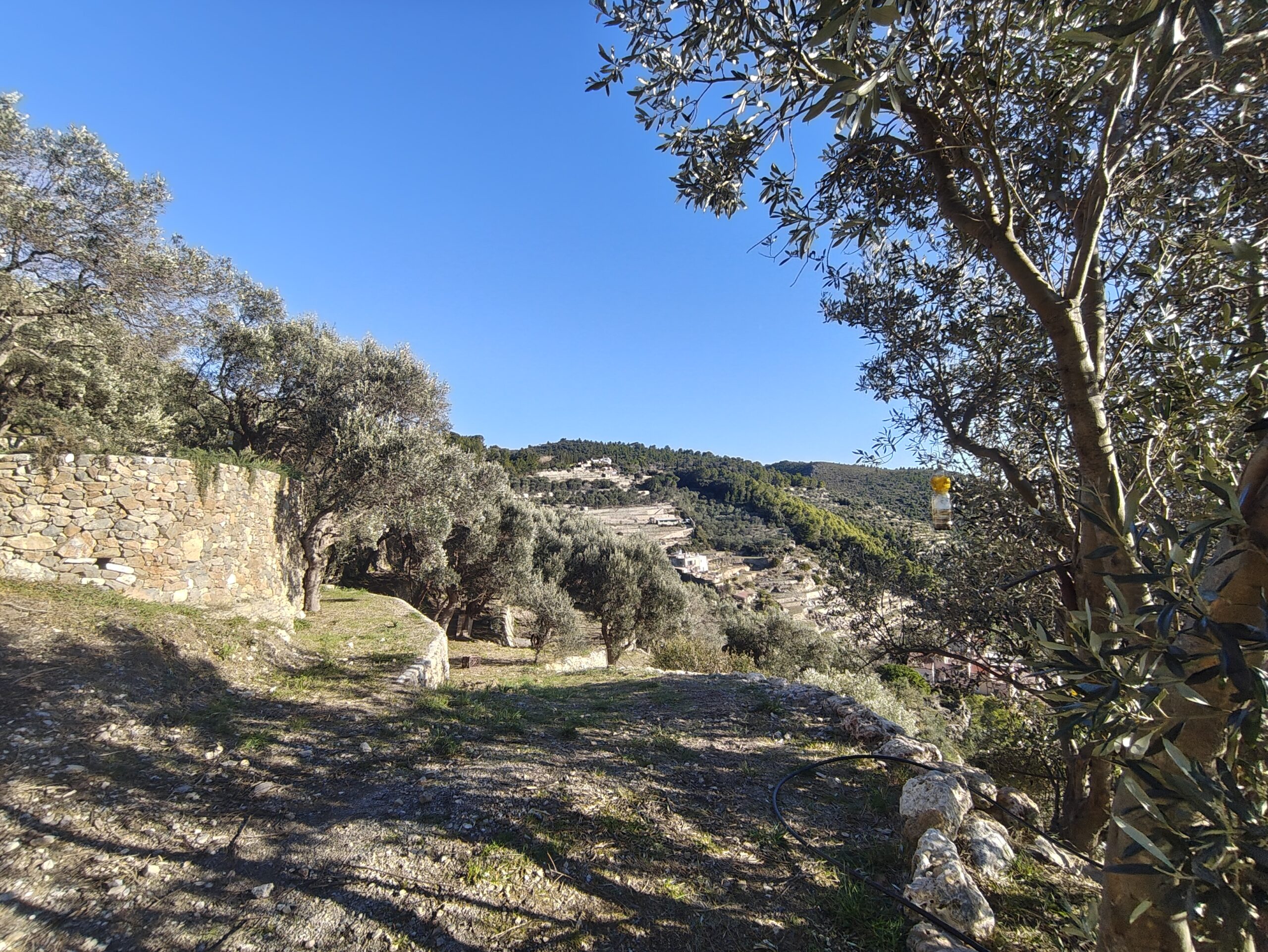
I borghi più belli d’Italia translates to “the most beautiful villages of Italy.” It’s a certification created by an association that recognises over 350 small historic towns across the country — places that represent a quieter, hidden Italy.
In Liguria, 29 towns and hamlets carry this title. Noli makes the list. Finalborgo too. And this week, we discovered another: Borgio Verezzi.
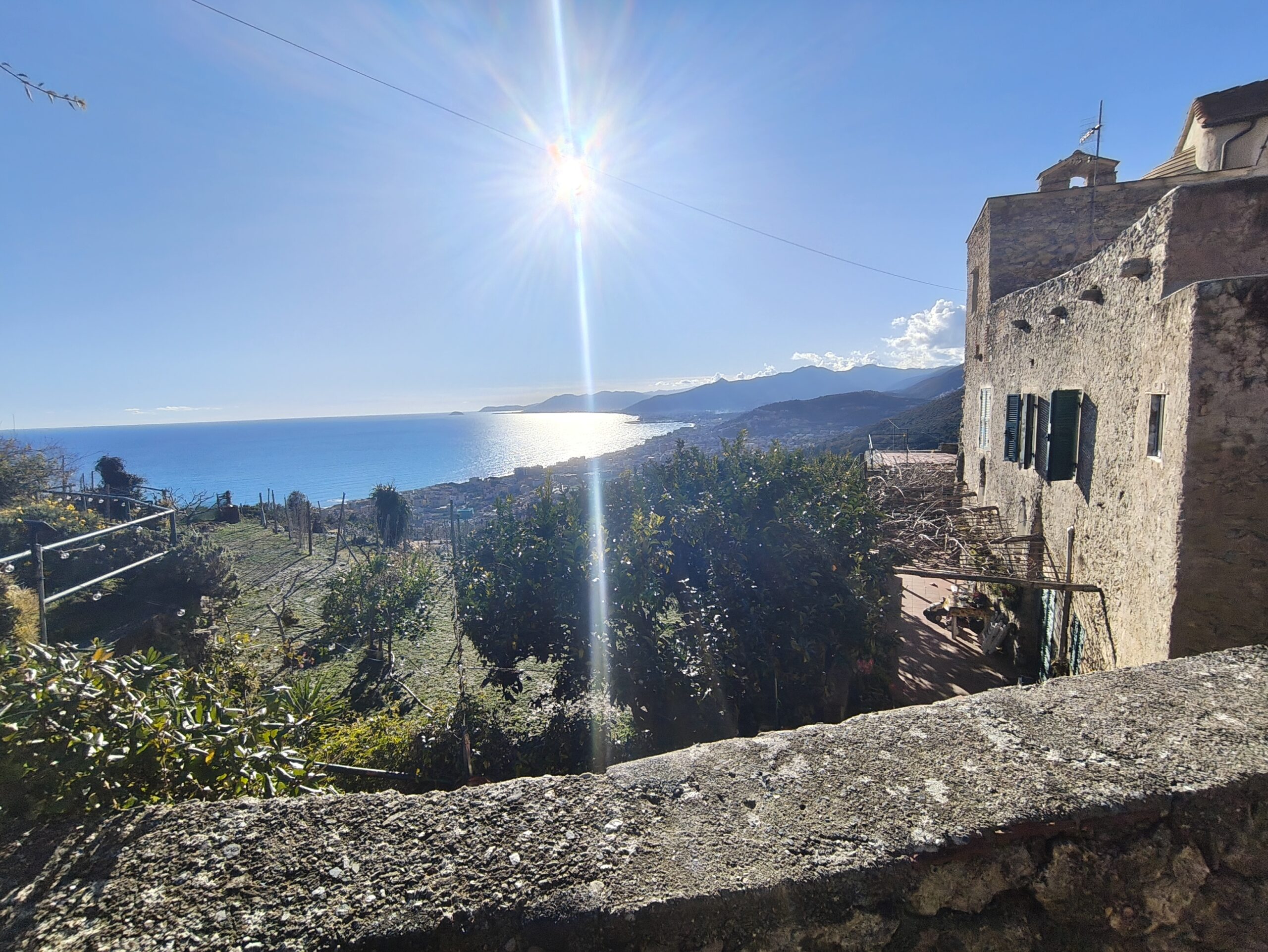
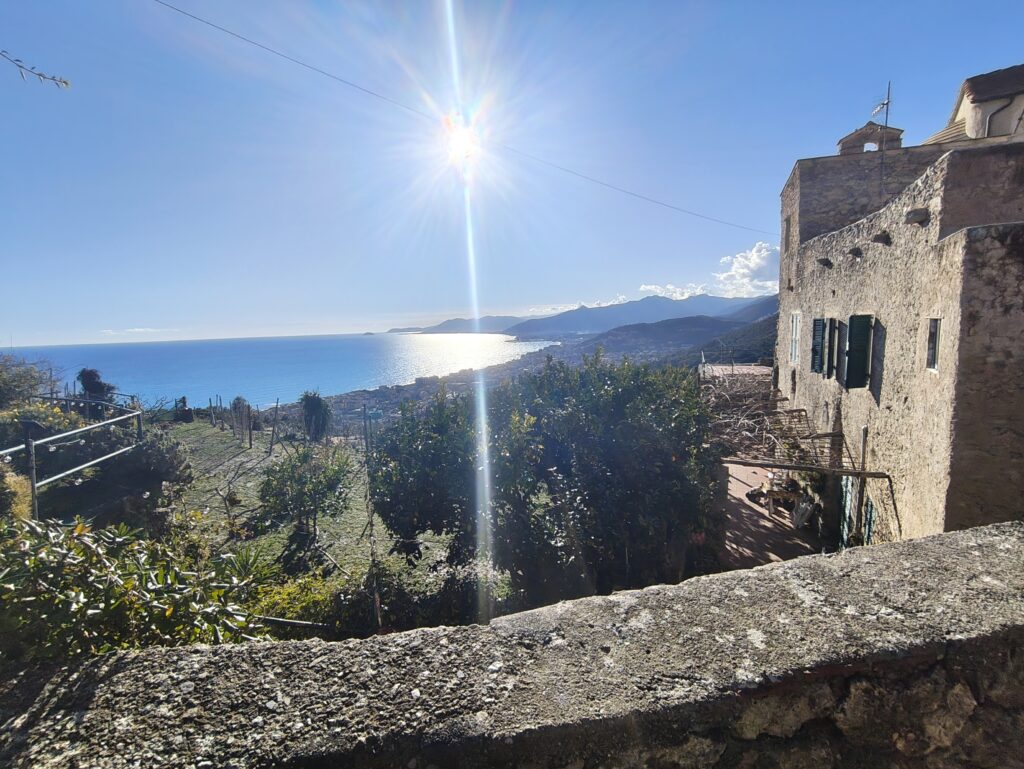
The drive from Varigotti to Verezzi is a study in trust. Hairpin bends, single-lane roads, centimetres of clearance, and drivers who know every curve by heart. Villas cling to the hillsides. The road demands attention — but when you dare to look up, the view opens completely: the Mediterranean below, the Ligurian mountains rising into cloud, snow still resting on their peaks. From here, the coastline unfolds in a long sweep from Verezzi to Albenga, and just offshore, one of Liguria’s small islands appears in the distance: Isola Gallinara.
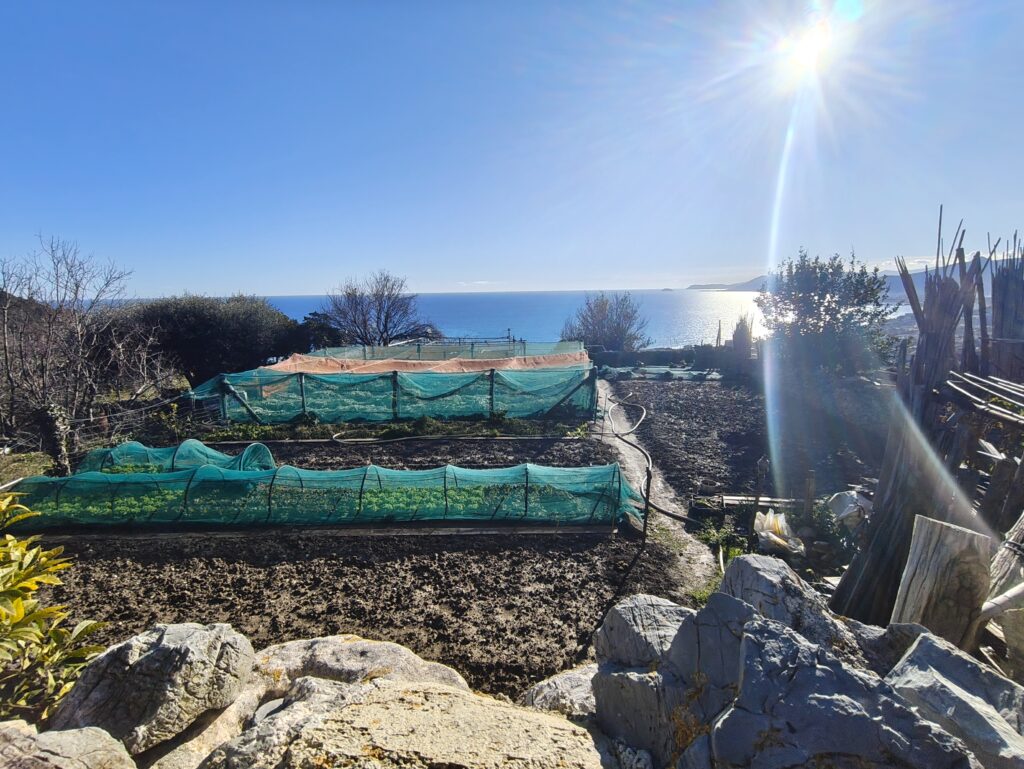
But the beauty of Borgio Verezzi doesn’t stop there. It doesn’t take more than ten minutes to cross the medieval hamlet, yet wandering its narrow streets feels like stepping into another century. Cobbled alleyways beneath stone arches. Fortified walls opening onto endless views of the coast. Vegetable gardens soaked in sunlight, artichokes flourishing in neat rows.
It is quiet, no doubt. But people still live here — tending their gardens, keeping three small restaurants open even in late January. As we left, I realised that no words or photographs could quite capture this place. It felt like a tiny slice of paradise, unexpectedly and quietly preserved.
At the other end of the scale lies Savona. The contrast with Borgio Verezzi could not be sharper. Here, the coast hums with life: people, traffic, noise, movement — and a colossal cruise ship towering above the city’s buildings. I tried not to be deterred. I had read that Savona’s old town was worth exploring, and that here, one could discover for whom the bell tolls.
We headed to Piazza Goffredo Mameli. Mameli, incidentally, is the author of the lyrics of Italy’s national anthem — but that was not why we were here.
Every day, at 6pm, the piazza stops. Literally and figuratively. Two police officers stand ready in the middle of the square. At exactly six, the bells of the Monumento ai Caduti — the Monument to the Fallen — begin their twenty-one tolls. With sharp whistles, the police halt the cars. Pedestrians pause, almost instinctively. The entire piazza falls still. The bell tolls twenty-one times. Then, with the final note, the square returns to life: engines start, the police move away, people continue on their way.
The tradition is nearly a century old. It began after the First World War to commemorate the victims of the conflict. Twenty-one tolls for the letters of the Italian alphabet, symbolically recalling the names of fallen soldiers. Six o’clock marks the hour of the armistice. Today, the ritual honours the victims of all wars.
And so, every day at six, Savona remembers.
Between the silence of the hills and the pulse of the port, Liguria reveals two very different ways of holding on to history.